The Object of Desire : Embodiment, Manipulation, and Dissonance
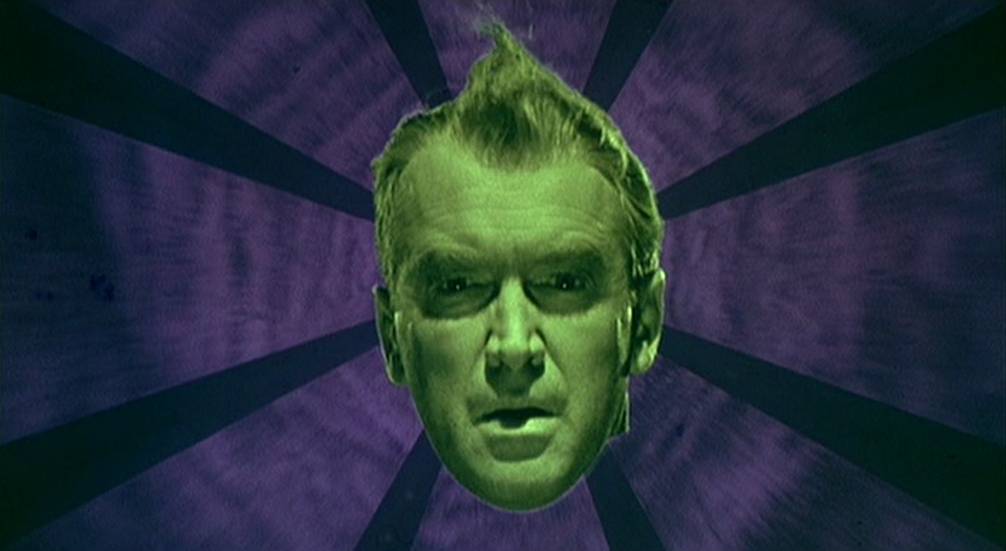
Human behavior often appears complex, yet much of it may be traced to a single psychological structure. Human beings experience fear, and this fear expresses itself in many forms. While fears appear different on the surface, etched as events in memory or chitta, they tend to originate from a common source. This is different for each of us and can be something like the fear of being diminished, abandoned, rendered insignificant, or left psychologically unsafe. These fears tend to be formed in our childhood.
Desire may seem to emerge as a response to this fear. It is not independent of fear, nor is it opposed to it. Desire is the movement through which the mind attempts to "escape" fear. What we want, chase, or attach ourselves to is ultimately shaped by this attempt to resolve an inner fundamental yet "necessary" instability.
The crucial element in this process is what can be called the object of desire.
The Object of Desire

The object of desire is not the external thing toward which desire seems to point. It is an internal construct created by the mind. This construct represents a future state in which fear is imagined to be relieved.
External objects, people, or situations become relevant only after this internal object has already been formed. The mind then projects this internal object onto something in the world, mistaking the projection for the source of relief.
Once the object of desire is established, it produces three major psychological effects: embodiment, dissonance, and manipulation. These effects are not moral failures; they are structural consequences of how the mind attempts to manage fear.
Embodiment
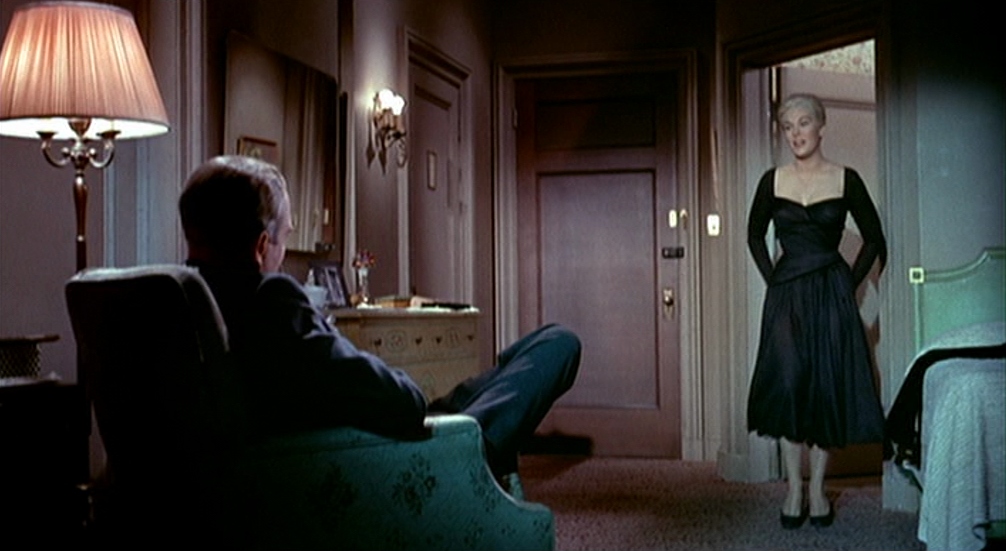
Embodiment occurs when the internal object of desire takes form in external reality.
A person who desires superiority may embody that desire through large possessions, expensive symbols, or proximity to powerful individuals. A person who fears loneliness may embody desire in another human being, seeing them as emotional security rather than as an independent individual.
In embodiment, the external object becomes meaningful not because of what it is, but because of what it carries psychologically. The object becomes a container for the imagined resolution of fear.
In Vertigo, Scottie forms an internal object of desire after losing the woman he loves. When he encounters Judy, a woman who resembles his past love, he perceives her through the internal image. Her appearance, gestures, and demeanor become meaningful because they align with the object he carries in his mind. The embodiment is not in Judy herself, but in how the mind imposes the object onto her.
Dissonance
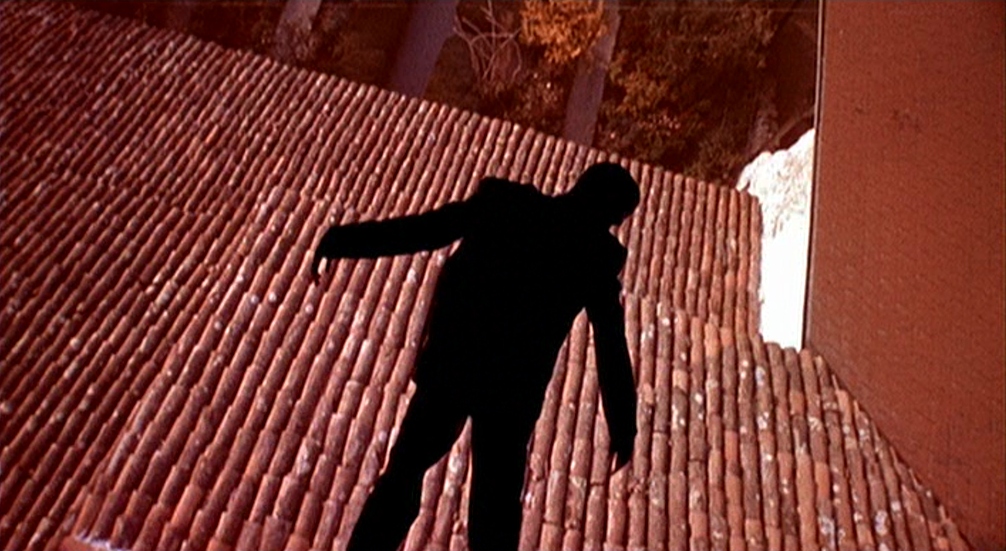
Dissonance arises when the external object fails to fully correspond to the internal object of desire.
Because the internal object is imaginary, no external reality can fully satisfy it. This creates a gap between what is perceived and what is needed. The result is confusion, anxiety, disappointment, and emotional instability.
This pattern is commonly seen in relationships, ambition, and identity. The mind reacts strongly not because something has gone wrong externally, but because the internal structure designed to keep fear under control is no longer holding.
At this point, thinking becomes increasingly irrational, and perception becomes distorted.
Even as Scottie attempts to transform Judy into his idealized image, she is not his past love. She has her own agency and autonomy.
Manipulation

When the individual holds power in relation to the external object, dissonance can evolve into manipulation.
Rather than questioning the internal object of desire, the ego attempts to reshape reality. This can appear as persuasion, emotional pressure, control, dishonesty, or subtle coercion. The goal is to bring reality back into alignment with the internal image so that fear can remain suppressed.
Manipulation, in this sense, is not necessarily malicious. It is the ego attempting to stabilize itself when its projection is threatened.
Scottie has influence over Judy, and he exercises it to pressure her to change her hair, dress, and gestures to fit his internal image.
Temporality and the Role of the Future
This entire process is sustained by time.
Perception occurs in the present moment. Desire does not. Desire always refers to a future in which fear is resolved. When an external object appears capable of satisfying desire, attention shifts away from the present and into imagined futures.
These imagined futures appear as repeated mental scenes: approval, success, belonging, novelty, relief. The mind rehearses them obsessively, generating mental noise and emotional tension. This repetition convinces the individual that the object truly holds value.
This is where Eckhart Tolle's insight becomes relevant. He points out that the ego depends on psychological time. Without constant movement into the future, desire loses its structure and fear loses its momentum. Presence interrupts the entire cycle—not by force, but by removing the temporal ground on which it stands.
Parallels With Lacan and Jung
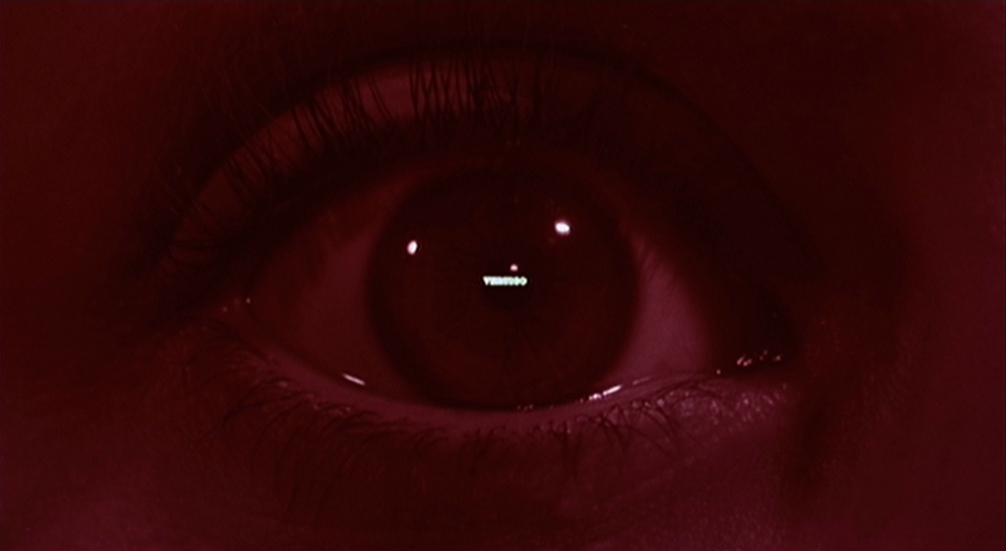
Lacan described desire as organized around an imagined object that structures longing but can never be attained. This closely parallels the idea that the object of desire is internally generated rather than externally found. The difference lies in emphasis: Lacan roots desire in lack, while this framework roots it in fear and its management through time.
Jung emphasized projection as a central psychological mechanism, particularly in love and conflict. This model aligns with Jung's understanding of projection but focuses less on archetypes and more on everyday cognitive and emotional dynamics.
Krishnamurti's influence appears not as doctrine but as orientation. His insistence that fear, desire, and suffering arise through thought and psychological time resonates with the structure described here, though the present framework remains grounded in observable mental processes rather than spiritual instruction.
Closing Reflection
Fear gives rise to desire.
Desire generates an object.
The object distorts perception.
Time sustains the illusion.
Power attempts to preserve it.
Suffering arises not because objects fail us, but because we mistake internal constructions for external truths. When the object of desire is seen as a projection rather than a solution, perception returns to what is. And in that clarity, fear no longer needs to invent futures to survive.
Notes to the reader
This hypothesis is based on my reading of books by Krishnamurthy, Lacan, Jung, Patanjali, and Tolle. I tend to combine Eastern and Western way to thinking about the mind. This can be concerning for many readers. I know that. I think, when combined, they raise new question and new ideas of looking at the complex world. My reader group is anyways, just a few friends and a bunch of AI bots (chatGPT is the highest ranked in terms of visits), so, I just write for myself.
Colophon
The images are from the best movie recommendation engine on the internet - Film Grab, and the texts are cleaned up with help of Claude and GPT5.